Start With the Real Experience
Include what you bought or used, how the company handled the situation, and whether the outcome matched your expectations.
Use this page to turn real customer experience notes into clearer and more trustworthy Trustpilot review drafts before you publish.
"I used Northlane Hosting for a migration from a slower provider and the experience was much smoother than I expected. The support team replied quickly, explained each step clearly, and fixed one DNS issue before it turned into downtime."
A strong Trustpilot review sounds specific, grounded, and clearly based on a real experience.
Include what you bought or used, how the company handled the situation, and whether the outcome matched your expectations.
The strongest Trustpilot reviews include one concrete detail such as delivery speed, support quality, refund handling, or product reliability.
Pick a tone that sounds like you and a length that fits how much context the experience needs.
Treat the output as a draft, remove anything inaccurate, and make sure the final review still reflects your own judgment.
Use this checklist to decide what details your Trustpilot review prompt should include before you generate a draft.
| Review Element | What to Mention | Why It Helps |
|---|---|---|
| SaaS / Software | Onboarding, support, reliability | Readers want to know whether the tool works in real workflows and how fast support responds. |
| Ecommerce | Shipping, packaging, product quality | Specific delivery and product details make the review feel more useful and believable. |
| Professional Service | Communication, expertise, results | Service buyers care about process, clarity, and whether the promised outcome was delivered. |
| Finance / Insurance | Clarity, response time, issue handling | In high-trust categories, specifics about how a problem was explained or solved matter more than hype. |
| Travel / Booking | Accuracy, support, booking changes | Travel reviews feel stronger when they explain what matched expectations and how issues were resolved. |
| Subscription Services | Billing, cancellation, value | Potential buyers look for signals about hidden friction, renewal terms, and support quality. |
| Review Element | What to Mention | Why It Helps |
|---|---|---|
| What you bought or used | Specific product or plan | This gives the review a clear subject instead of vague praise. |
| What stood out | Memorable detail | A real detail is what separates a believable Trustpilot review from generic filler. |
| How support responded | Speed and tone | Many Trustpilot readers care as much about the response process as the product itself. |
| One honest drawback | Minor friction point | Balanced reviews often feel more credible than reviews that sound perfect. |
| Would you recommend it | Clear takeaway | A recommendation signal helps readers understand the final judgment quickly. |
| Time or order context | When or why you used it | Timing makes the review feel more current and relevant. |
Use this quick guide before generating a Trustpilot review so the draft includes real evidence, balanced wording, and no invented claims.
| Intent | Add to the prompt | Good output should include |
|---|---|---|
| Software or SaaS review | Plan name, setup time, support response, one workflow that improved or failed. | A clear verdict, support details, and limits without pretending every feature was tested. |
| Delivery or ecommerce review | Product ordered, delivery timing, packaging condition, return or refund context. | Specific shipping and product notes plus a fair recommendation for future buyers. |
| Service or agency review | Scope of work, communication style, timeline, result, and any unresolved issue. | Process details, outcome quality, and a balanced note about fit or expectations. |
| Review-writing intent | Real purchase, support, delivery, billing, or service details plus the rating you plan to leave. | A written Trustpilot-style draft with clear context, not a fake screenshot, image, widget, or review link. |
Avoid targeting fake Trustpilot reviews as an intent. This page is optimized for people who want to write clearer Trustpilot-style feedback from a real customer experience.
This page helps turn raw experience notes into a cleaner review draft with a clear opening, one concrete detail, and a useful takeaway. It is intentionally not a Trustpilot image generator, widget mockup maker, or fake testimonial tool; the page stays focused on written review drafts from real customer experiences.
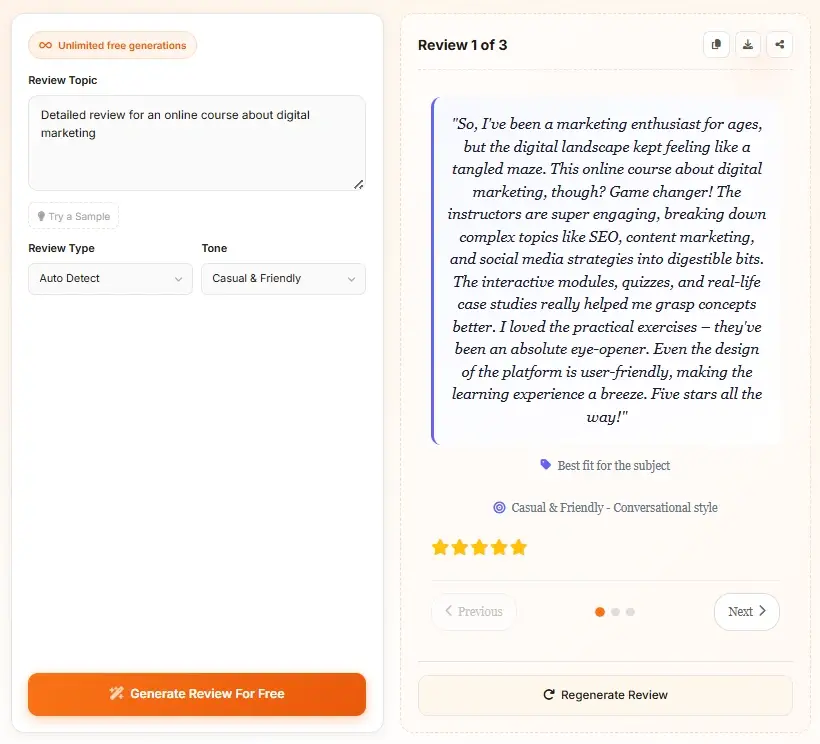
Trustpilot intent often overlaps with support quality, delivery, billing, refunds, and issue resolution, so the page is structured around those expectations.
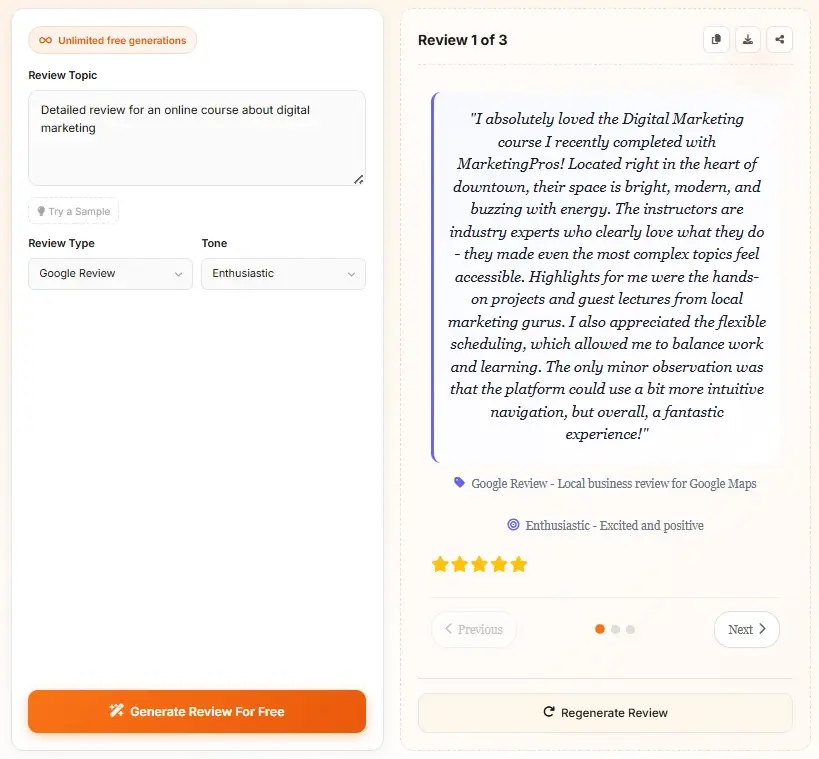
One draft is rarely enough. Three Trustpilot-style review options make it easier to choose wording that feels closest to your own voice.
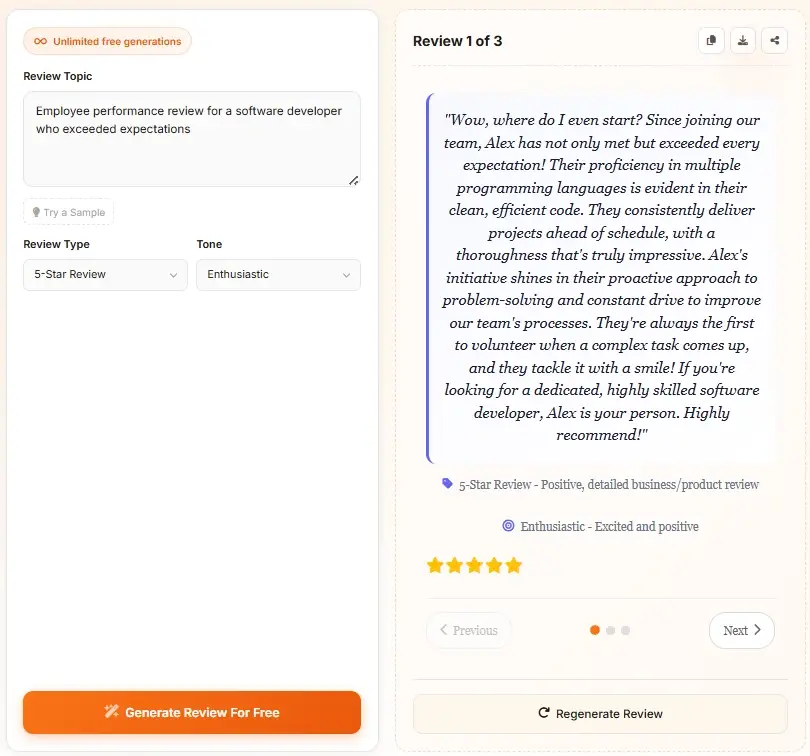
The cleanest use of AI here is to improve the wording of genuine customer feedback, not to simulate an experience that never happened.
If you actually used the product or service, this tool can help organize your thoughts and make the review easier to read without changing the facts.
A balanced review often feels more useful than perfect praise. A short note about setup friction, slower delivery, or a small confusion point can improve credibility when it is true.
Read the draft carefully and make sure the final wording still matches your own experience, especially if you are describing support interactions, billing issues, or a refund.
Do not use the page to create a review for a company you never bought from or interacted with. That turns a writing aid into fake review creation.
If every review sounds interchangeable, it becomes less useful for readers and more likely to look suspicious. Real customer experiences have specifics, and the draft should keep them.
Avoid exposing invoice numbers, personal contact details, payment information, or internal support notes in a public review.
A Trustpilot review generator is most useful when it helps a real customer write a more readable review from a genuine experience. Use it for clarity, not fabrication.
Read Trustpilot reviewer guidelinesA Trustpilot review generator helps turn rough notes about a real purchase or service experience into a more readable Trustpilot review draft.
Yes, if the review is based on your genuine experience. The safest use is to improve clarity, structure, and wording while keeping the facts true.
Include what you bought or used, how the company handled delivery or support, one memorable detail, and whether you would recommend the company.
Yes. This page is built around Trustpilot-style intent, where readers often care about support quality, shipping, billing, refund handling, and trust signals.
For many companies, 80 to 160 words is enough to explain what happened, mention one specific detail, and leave a clear takeaway.
Because balanced reviews usually feel more credible. A minor friction point can make the final review sound more realistic when it is true.
Businesses should avoid writing reviews on behalf of customers. The better use case is for real customers to use the tool themselves as a drafting aid.
Because one draft may sound too formal or too generic. Three versions make it easier to pick wording that feels like your actual voice.
Yes, but it should stay factual and specific. Add what happened, what you expected, how the company responded, and what would have fixed the issue. Avoid insults or claims you cannot support.
Purchase context, delivery or support timing, the outcome, and one balanced observation usually make the review more useful than a short star-rating comment.
No. This page creates written Trustpilot review drafts. It does not create Trustpilot widgets, badges, screenshots, review images, or fake social proof assets.
This page is for customer review writing. If you represent a business and need to reply to a Trustpilot review, use the review response generator so the tone and structure match a business reply.
Avoid invented purchases, exaggerated claims, private account details, and copied marketing language. Keep the final review grounded in what actually happened and what future buyers need to know.